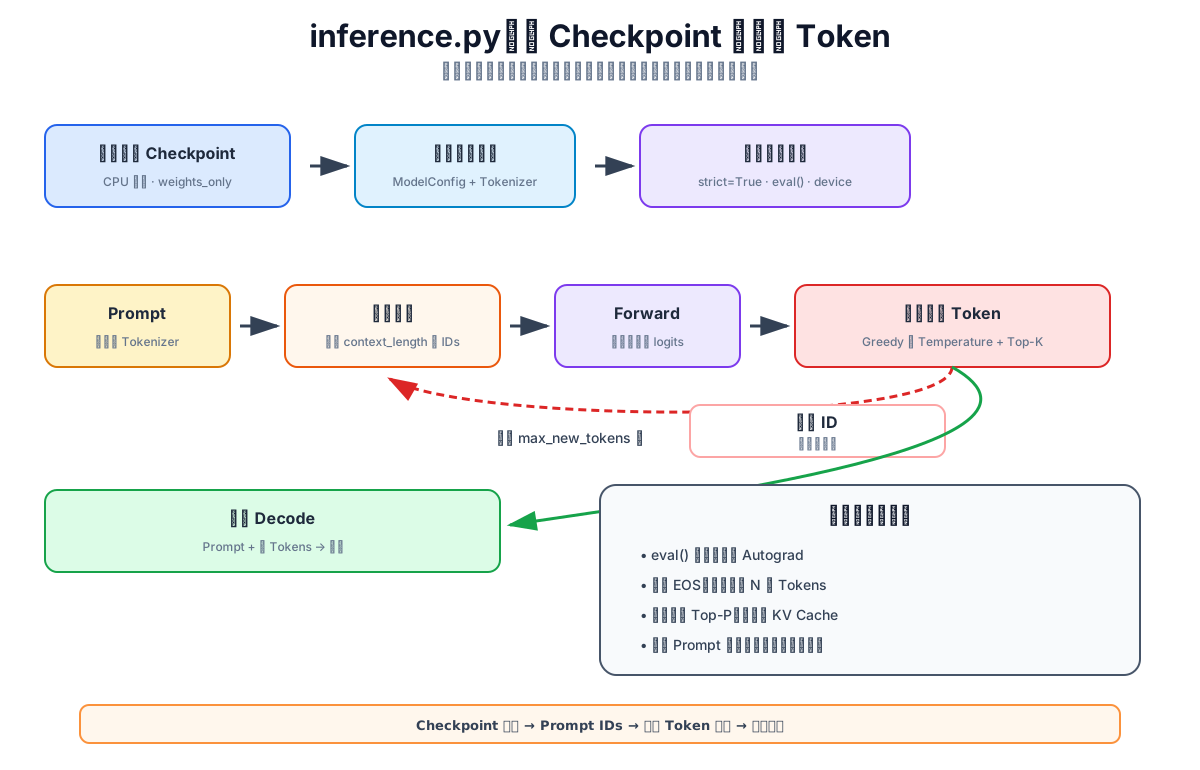
一句话总结:推理就是用 checkpoint 重建同一个模型和 tokenizer,把 prompt 编码成 token IDs,再一个 token 一个 token 地生成。代码不长,但模型契约、随机性和长度边界一个都不能丢。
📦 2024 年原始演示仓库:github.com/waylandzhang/Transformer-from-scratch。历史 demo 把数据、模型、训练和生成放在一个
model.py里;本章的inference.py与第 18、19 章审校后的独立文件配套。
20.1 推理不是“不训练”这么简单
| 训练 | 推理 | |
|---|---|---|
| 输入 | 连续序列与右移一位的 targets | prompt,以及已生成的 tokens |
| 每次 forward | 同时对多个位置计算 loss | 只取最后一个位置来选下一 token |
| 参数更新 | 有 | 没有 |
| Dropout | train() 下随机丢弃 | eval() 下关闭 |
| Autograd | 需要 | 用 inference_mode() 关闭 |
model.eval() 和 torch.inference_mode() 不是一件事。前者切换模块的训练/评估行为;后者不记录 autograd 状态。本书模型有 Dropout,没有 BatchNorm,所以这里 eval() 的直接作用是关闭 Dropout,不是“固定 BatchNorm”。
eval() 也不会把采样变成确定性。temperature > 0 时仍会从概率分布采样;temperature = 0 才是第 18 章定义的 greedy decoding。
20.2 先重建模型契约,再加载权重
第 19 章的 checkpoint 已经包含 model_config、tokenizer_name 和 model_state_dict。推理不应该在脚本里再猜一遍层数、宽度或词表大小。
def load_model(checkpoint_path, device):
    checkpoint = torch.load(
        checkpoint_path,
        map_location="cpu",
        weights_only=True,
    )
    required = {"model_state_dict", "model_config", "tokenizer_name"}
    if not isinstance(checkpoint, dict) or not required <= checkpoint.keys():
        raise ValueError("checkpoint is missing inference metadata")

    model_config = ModelConfig(**checkpoint["model_config"])
    tokenizer = tiktoken.get_encoding(checkpoint["tokenizer_name"])
    if tokenizer.n_vocab != model_config.vocab_size:
        raise ValueError("tokenizer vocabulary does not match the model")

    model = Model(model_config)
    model.load_state_dict(checkpoint["model_state_dict"], strict=True)
    model.to(device)
    model.eval()
    return model, tokenizer
先 map_location="cpu" 再把重建好的模型搬到当前设备,不会因为 checkpoint 当年在某张 GPU 上保存,就强迫今天的机器找同一个设备。strict=True 要求权重名与 shape 完整对上。
weights_only=True 会限制 unpickler 能构造的对象,但它不是“任意下载文件都安全”的承诺。仍然只加载自己创建或来源可信的 checkpoint。
20.3 Prompt 也要遵守 tokenizer 契约
继续用原来的商品名称语料:
prompt = "农夫山泉 "
prompt_ids = tokenizer.encode(prompt, disallowed_special=())
if not prompt_ids:
    raise ValueError("prompt must contain at least one token")
x = torch.tensor(prompt_ids, dtype=torch.long, device=device)[None, :]
这里不写死 token IDs。Tokenizer 版本、前后空格、甚至一个标点都可能改变结果,应该让当前实际 tokenizer 打印它。
如果 prompt 超过 context_length,第 18 章的教学版 generate() 会在每一步只取最后 context_length 个 token。较早部分仍保留在最终输出 tensor 里,但已经不再影响新 token。
本书用的是固定正弦位置表。裁成新的可见窗口后,窗口内的位置编号也会重新从 0 开始。这是教学实现的明确约定,并非所有 serving system 的默认行为。
20.4 生成参数有边界,没有万能推荐值
20.4.1 Temperature
第 18 章的定义是:
temperature = 0:直接取最大 logit,是 greedy decoding;0 < temperature < 1:分布更尖,高 logit token 更容易被选中;temperature = 1:不改变 logits 的相对尺度;temperature > 1:分布更平。
它不是“事实问答用 0.2、创意写作用 0.9”这种固定处方。小模型的 logits 校准、语料与任务都会改变合适值。
20.4.2 Top-K
top_k=K 先保留 logit 最高的 K 个 token,再在它们之间 Softmax 与采样。本书代码会把大于词表的 K 截成词表大小,None 表示不过滤。Top-K 会去掉长尾,却不保证文本正确、不重复或连贯。
20.4.3 Max New Tokens 与停止条件
这个教学模型没有定义 EOS token,也没有 stop string。因此 max_new_tokens=80 就会生成恰好 80 个新 token;它是硬上限,不是“最多生成,模型会自己停”。
20.5 完整 inference.py
import argparse
from pathlib import Path

import tiktoken
import torch

from model import Model, ModelConfig


def select_device():
    if torch.cuda.is_available():
        return torch.device("cuda")
    if hasattr(torch.backends, "mps") and torch.backends.mps.is_available():
        return torch.device("mps")
    return torch.device("cpu")


def load_model(checkpoint_path, device):
    checkpoint = torch.load(
        checkpoint_path,
        map_location="cpu",
        weights_only=True,
    )
    required = {"model_state_dict", "model_config", "tokenizer_name"}
    if not isinstance(checkpoint, dict) or not required <= checkpoint.keys():
        raise ValueError("checkpoint is missing inference metadata")

    model_config = ModelConfig(**checkpoint["model_config"])
    tokenizer = tiktoken.get_encoding(checkpoint["tokenizer_name"])
    if tokenizer.n_vocab != model_config.vocab_size:
        raise ValueError("tokenizer vocabulary does not match the model")

    model = Model(model_config)
    model.load_state_dict(checkpoint["model_state_dict"], strict=True)
    model.to(device)
    model.eval()
    return model, tokenizer


def encode_prompt(tokenizer, prompt, device):
    prompt_ids = tokenizer.encode(prompt, disallowed_special=())
    if not prompt_ids:
        raise ValueError("prompt must contain at least one token")
    return torch.tensor(
        prompt_ids, dtype=torch.long, device=device
    ).unsqueeze(0)


def parse_args():
    parser = argparse.ArgumentParser()
    parser.add_argument(
        "--checkpoint",
        type=Path,
        default=Path("model/checkpoint.pt"),
    )
    parser.add_argument("--prompt", required=True)
    parser.add_argument("--max-new-tokens", type=int, default=80)
    parser.add_argument("--temperature", type=float, default=0.7)
    parser.add_argument("--top-k", type=int)
    parser.add_argument("--seed", type=int, default=1337)
    return parser.parse_args()


def main():
    args = parse_args()
    device = select_device()
    model, tokenizer = load_model(args.checkpoint, device)
    x = encode_prompt(tokenizer, args.prompt, device)

    torch.manual_seed(args.seed)

    with torch.inference_mode():
        y = model.generate(
            x,
            max_new_tokens=args.max_new_tokens,
            temperature=args.temperature,
            top_k=args.top_k,
        )

    parameter_count = sum(p.numel() for p in model.parameters())
    print(f"device={device} prompt_tokens={x.size(1)}")
    print(f"parameters={parameter_count:,}")
    print("---")
    print(tokenizer.decode(y[0].tolist()))


if __name__ == "__main__":
    main()
运行:
python inference.py --checkpoint model/checkpoint.pt --prompt "农夫山泉 " --temperature 0.7 --top-k 50输出应该由当前 checkpoint 真实生成。旧版的四行商品名称没有对应可复现 checkpoint,所以本版不再把它写成实验结果。
20.6 想看每一步,就打印真实候选
不要手写一组看起来很合理的概率。可以直接从当前模型取候选:
@torch.inference_mode()
def show_next_candidates(model, tokenizer, x, k=5):
    x_crop = x[:, -model.config.context_length:]
    logits, _ = model(x_crop)
    probs = torch.softmax(logits[0, -1], dim=-1)
    top_probs, top_ids = torch.topk(probs, min(k, probs.numel()))

    for probability, token_id in zip(top_probs, top_ids):
        piece = tokenizer.decode_single_token_bytes(
            token_id.item()
        ).decode("utf-8", errors="backslashreplace")
        print(repr(piece), f"{probability.item():.4f}")
单个 token 可能只是一段 UTF-8 bytes,不一定能独立解码成完整字符。因此这里先取 decode_single_token_bytes(),而不是假设每个 token 就是一个“词”。
20.7 常见问题要从边界开始查
- 权重名或 shape 不匹配:不要改成
strict=False把问题藏起来,先确认model.py与 checkpoint 是否来自同一契约。 - 输出重复:可能来自语料重复、过拟合、校准差或采样设置。调大 temperature 只是试验,不是保证。
- 输出不连贯:先看真实 train/valid loss、prompt 是否接近训练分布、tokenizer 是否一致,再调 temperature 和 Top-K。
- 生成慢:本章的
generate()每次都重算当前窗口。GPU 可能有帮助,但核心冗余要到第 22 章用 KV Cache 才消掉;Flash Attention 改善的是每次 Attention 的内存 I/O 与计算实现,两者不是同一件事。
20.8 本章总结
- 从 checkpoint 的
model_config和tokenizer_name重建契约,不在推理脚本里猜; - 权重先安全地加载到 CPU,再把模型搬到当前设备;
eval()处理模块行为,inference_mode()处理 autograd,采样随机性由 decoding 规则决定;- Temperature、Top-K 和长度都有精确边界,不应写成普遍适用的经验处方;
- 本章无 EOS,会生成恰好
max_new_tokens个 token; - 不编造 token IDs、概率、参数量或生成结果,全部让当前代码与 checkpoint 给出。
本章交付物
- 能用 checkpoint 重建完全一致的 Model 和 tokenizer
- 能区分
eval()、inference_mode()与 greedy/sampling - 能说清 prompt 截断、Temperature、Top-K 和生成长度的边界
- 能用当前 checkpoint 运行
inference.py,而不依赖预写结果
Part 5 总结
第 18 章定义模型,第 19 章训练并保存完整状态,第 20 章只取推理需要的部分来生成文本。三个文件加起来已经超过旧版声称的“不到 400 行”,因为本版补上了配置校验、数据边界和恢复状态。行数不是目标:它仍是教学实现,但每一个简化都应该说清。
理解这条链路后,你能看懂 GPT 式 decoder 的主干,但不等于已经复制了 ChatGPT 或生产级 serving system。真实系统还要处理 KV Cache、batching、定制 kernel、并行、内存管理与服务调度。
下一章预告
现在的生成循环每走一步,都会重新计算当前窗口里的 Attention。第 21 章先看 Flash Attention:它不改变 Attention 的数学结果,而是重排计算与内存访问,让同一次 Attention 做得更高效。第 22 章再用 KV Cache 消掉 decoding 步之间的 K/V 重算。